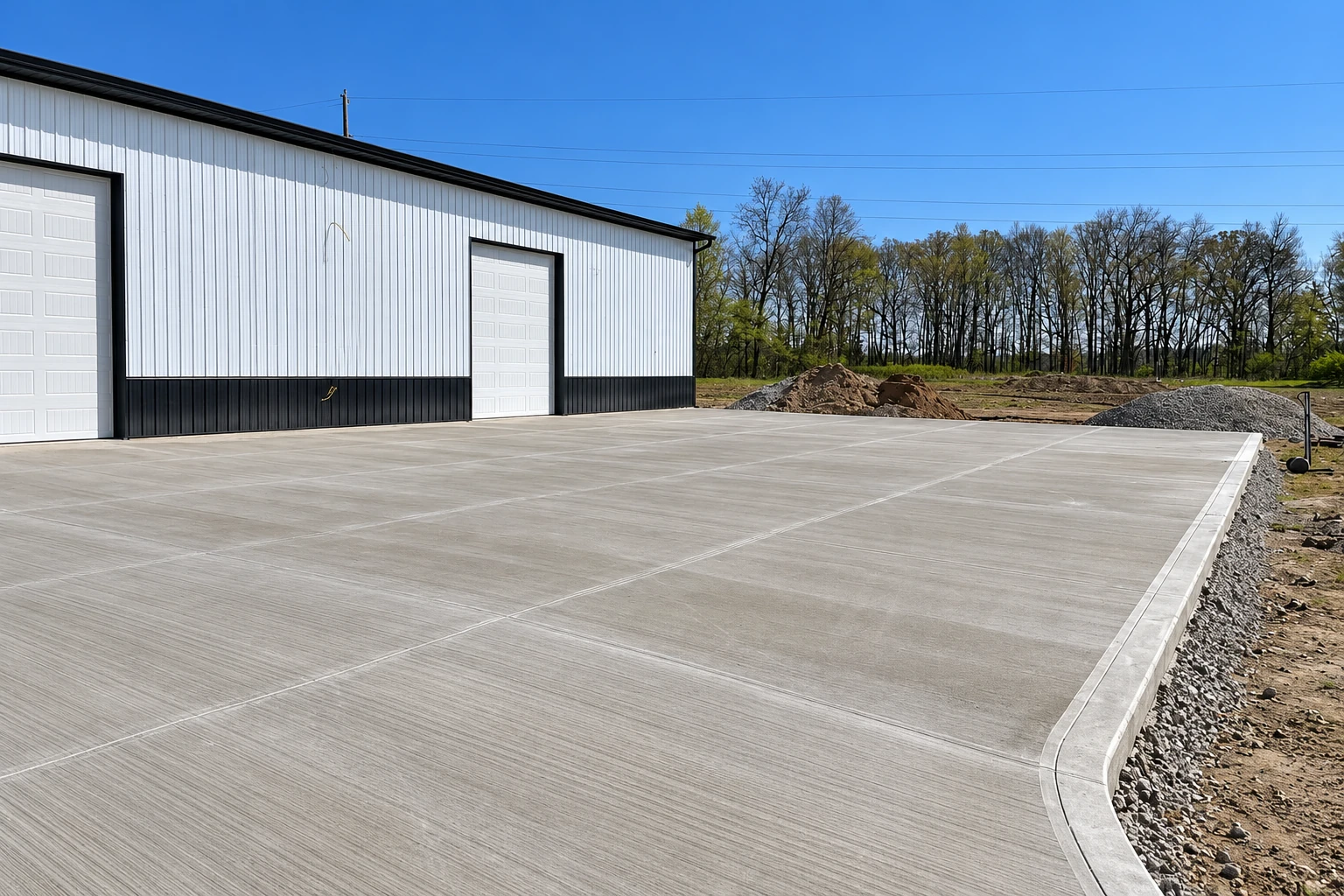
Concrete parking lot building in Concord CA - a lot built for the traffic it carries
Gravel ruts, sunken slabs or water pooling where people park? We build concrete lots on a packed base, sized for the vehicles that use them.
- Licensed and insured.
- Free in-person estimates.
- Expect a reply within 1 business day.
What does it take to build a concrete parking lot in Concord?
Concrete parking lot building in Concord, CA starts with the subgrade, the packed ground the lot sits on, and ends with a slab thick enough for the cars and trucks that use it. Because concrete is stiff, it spreads each vehicle's weight over a wide patch of that ground, and that is what keeps a lot flat.
Most people call me when a gravel lot has turned to ruts or an old lot is breaking up faster than they can patch it. The price moves mostly with the size of the lot, the thickness your traffic calls for, how much digging and grading the site needs and whether drainage or stormwater work has to be built in. The schedule turns on those same things, plus whether the city has to review plans before we can start, and the written estimate gives you the figure for your own lot.
How do you know your parking area needs rebuilding?
Ruts in a gravel lot
Tires dig ruts, puddles sit in them and dust gets tracked inside. That usually means the ground was never built to carry traffic, and every season you wait washes more gravel off and adds to the grading we'll do later.
Cracked, sunken slabs
Slabs drop, tip or crack in lines nobody planned. That usually points to a base that settled or a soft patch underneath, and once water gets in through the cracks, the slabs next door tend to follow.
Water standing after rain
Puddles sit in low spots or run toward a building instead of away from it. The slope is usually wrong or the water has nowhere to go, and waiting lets it soak the base and work its way under walls.
Crumbling edges and chips
Edges break where cars turn and the top flakes off where trucks park. Usually the slab is too thin for its traffic or was poured in midday heat and left with a weak, dusty top, and those chips grow into trip hazards.
How we handle concrete parking lot building
I start with what will drive and park on the lot and how big it is, because that tells us the thickness, the design and how much city review to plan for. Then we dig out and pack the subgrade, and trade guidance for lots says no special layer is needed under the slab as long as the soil is the same all the way across, so soft or odd patches get dug out and replaced with material like the rest. We set the forms so water runs away from buildings, place rebar, the steel bars that hold any crack tight, where the design calls for it, and pour early in the day so the top doesn't dry out weak in the heat. The surface gets a broom finish, a light texture that gives tires and shoes grip in the rain, and we cut control joints, shallow cuts that give the slab a planned place to crack, in a layout I go over with you before the pour. Then we keep traffic off while the slab cures, the slow hardening that gives it its strength. If the budget gets tight, I'll cut a fancy finish before I cut the base, because nobody sees the base on day one and everybody sees it a few winters later when it settles.
A lot rarely stands alone. Light poles, sign posts and carport columns sit on concrete footings that we plan along with the slab, and if the building beside the lot has settled, foundation raising is its own job that I'll look at while I'm out there.
Car and pickup parking
This suits apartment, office and church lots where the traffic is mostly passenger cars. The slab can sit at the thinner end of the design, so more of the budget goes into the base and the joints.
Delivery and light truck traffic
This suits lots that see box trucks, trash pickup or regular deliveries. Those wheels call for a thicker slab, especially in the drive lanes and the spots where trucks turn and stop.
Rebuilding part of an old lot
This suits owners with one bad section and a lot that's otherwise holding up. We take out the broken slabs and match the new ones to the grades around them, though a larger rebuild can bring in city review, which I explain below.
Get a written estimate for your parking lot
Send the lot's rough size and what will park on it, and we'll reply within one business day. I'll set a time to see the site, and the in-person estimate is free and in writing, with no obligation.
(925) 536-0945- Based in
- Concord, CA 94519
- Hours
- Mon–Fri: 6 AM–11 PM, Sat–Sun: 8 AM–9 PM
What happens when you call about a parking lot in Concord?
Here's how a lot job runs from your first call to the final walk, and who you'll be dealing with at each step.
Call or send a message
You call (925) 536-0945 or use the form, and we set a time for me to come out. It helps to have the lot's rough size and a list of the vehicles that will use it.
Walk the lot together
I look at the site with you, explain the choices and put the estimate in writing. It lays out the thickness, the joint layout and the city review I expect, so you can see what each part of the price pays for.
Sort out the city side
Once you're set, we take care of what the city or county needs for your address before anyone digs. On a lot that falls under Concord's stormwater review, the city has to approve the plans first, so that review sets the start date more than our calendar does.
Build it and walk it
We do the work with me on site alongside our form setters and finishers. When it's done, we walk the finished lot with you and go over the joints and the upkeep to expect.
Why Concord property owners call King Concord Concrete Works for lots
The owner writes your estimate
I come out myself to look at the lot and write the estimate, and I'm on site with our small crew of form setters and finishers during the work. The person who priced the base is the one watching it go in.
Licensed and insured for lot work
We're licensed and insured. California requires a license from the Contractors State License Board for anyone building or altering a parking facility when the job needs a building permit, uses any other workers or totals $1,000 or more in labor and materials, and since any lot takes a crew, that covers this work.
Options explained since 2020
We've been in business since 2020, and we're known for laying out the choices plainly before anyone signs. You'll know why the base, the thickness and the joints cost what they do.
Satisfaction guaranteed on every job
That's our promise on every job, lots included. I'd rather spend an extra hour on the joint layout before the pour than leave you surprised by a crack later.
If you're planning a lot, send us the details through our contact page or call (925) 536-0945, and I'll come look at the ground with you.
Parking lots, drainage and Concord's stormwater rules
The rule that changes a lot job most in Concord is stormwater. When a project replaces 5,000 square feet or more of hard surface like concrete and exposes the base underneath, the city's stormwater rules require treatment built into the plans, such as bioretention, a planted area that catches runoff and filters it through soil, or permeable pavement that lets water soak through. The city lists parking lot resurfacing or reconstruction among the projects that may trigger these rules, and it wants site designs to keep new paving to a minimum, with runoff from the rest captured and used or treated. The property owner is responsible for submitting the plans for city review and working with the Engineering Division, so on a lot that size we check with the city or county that covers your address, handle the permit paperwork with you and put the treatment areas into the layout and the price from the start.
Plenty of the lots we're asked about sit behind small shops or apartment buildings, squeezed in with water that has nowhere to go, so I look at where the runoff ends up before I talk thickness. We're based in Concord and do the same lot work in Pleasant Hill and Martinez, and if your city isn't on our list, call and ask.
Questions about parking lots in Concord
How thick should a concrete parking lot be for cars and trucks?
A national trade group's guide says 4 inches of concrete without steel is usually enough for passenger cars, pickups and panel vans only, and that light trucks and heavier commercial use may call for 5 or 6 inches. That's general guidance, so the final thickness for your lot comes from your soil and the vehicles that will actually use it, which I check on site.
How much does a concrete parking lot cost per square foot in the Bay Area?
Concrete slab or pad work in the Bay Area usually costs about $8 to $16 per square foot, and that's general market pricing, not our price. Where your lot lands depends on its size, the thickness your traffic needs, how much digging and grading the site takes and whether stormwater measures apply. The estimate I write after seeing the lot gives you the figure for yours.
Do I need a permit to build a concrete parking lot in Concord?
If the job moves soil or reaches into the public right-of-way, the strip along the street the city controls, the city's Engineering Division issues separate grading and encroachment permits for that work. The Project Pal tool on the city's permit center page shows which permits your project requires and estimates the fees. I look at all of this for your address before writing the estimate.
Is concrete or asphalt better for a parking lot?
For a lot you want to stay flat under steady use, I lean toward concrete, because it's stiff and spreads a vehicle's weight over more of the ground than asphalt does. That's also why trade guidance says a concrete lot can be thinner than asphalt on the same soil. Asphalt has its place, but I build in concrete, so you'll hear that side from me.
How do I maintain a concrete parking lot over the years?
Typical upkeep is cleaning and restriping, sealing cracks, repairing spalls, which are spots where the top chips away, and in time replacing or stabilizing a slab that has moved. Handling the small items early keeps water out of the base, and water in the base is what turns a cracked slab into a sunken one.
What is the best way to prepare for a concrete parking lot estimate?
Make a list of the vehicles that will use the lot and have a rough size in mind, because thickness is chosen by the kind of traffic, the ground underneath and the strength of the concrete. A delivery truck once a week changes the design more than people expect, so put it on the list. Then call (925) 536-0945 or use the form to set the visit.
Related services for parking lot projects
Concrete footings
Light poles, sign posts, carport columns and low walls around a lot all need solid bases dug below the slab, sized for what they carry.
Foundation raising
When a building next to your lot has sunk or tipped, raising its foundation brings floors back toward level before new paving is set against it.
Service areas around Concord for lot work
King Concord Concrete Works is based in Concord, California, and we build lots in the cities around it, from Walnut Creek to Antioch. These 12 cities have their own pages, and they aren't the only places we work.
Concord, CA
Book a site visit for your lot
Call (925) 536-0945 with the lot's rough size and the vehicles that will use it, because those two answers let me plan the visit around what matters.